
2024
Today’s devotional
This devotional here was the last one due April 30th- of what I sensed was a “divine homework” I had to complete. Going forward, will focus on private prayers through these devotionals as an inspiration- and of course- other prayer files I have elsewhere for at least 15-90 days without posting new devotionals. Once I feel I am satisfied with the prayer progress through these, I can post more devotionals. Ultimately, the study of the Word should help us connect with God, and not become another labor that hinders fellowship and communion through prayer and worship. I sense I have covered all the insights I needed for the season.
May 30th, 2024
THE LAMB AWAKENS AND THE LION REIGNS
The Lord is not slow in keeping his promise, as some understand slowness. Instead he is patient with you, not wanting anyone to perish, but everyone to come to repentance [NIV]- 2 Peter 3:9
Say unto God, How terrible art thou in thy works! through the greatness of thy power shall thine enemies submit themselves unto thee [KJV]- Psalms 66:3
SECTION 1: INTRODUCTION
This is a follow up teaching after what we had previously discussed on the Hebrews 10:13 text. It should also be seen in an eschatological context of the End Times. 2 Peter 3:9 gives us a message of hope during these perilous times. All is not lost because of God’s patience and kindness. The only reason God has not yet shut the Ark of Salvation is so that all animals, all wicked people, will have a final chance to enter into the Ark before the storm. God could have caused the rapture to happen in 2000, when everyone was worried about Y2K conspiracies. The conversions that happened after 09/11/2001 terrorist attack on the New York World Trade Center would not have happened. People were awakened from their slumber, feeling like their whole world was crushing, and Christ was their only hope. Surely God’s patience for 1 year and 9 months for those people was “saving grace.” Now, as we come into the middle of 2024, about 24 years since the turn of the century, the number of people who need divine mercy to be rescued from the “bottomless pit” has not reduced but has increased. If there was ever time we needed divine patience to do all the good works we can do to rescue them is now. Absolutely. However, we also know that God will not be patient forever. Eventually the trumpet of the Lord shall sound and time shall be no more. The rapture will take place and the dead in Christ shall resurrect. The great tribulation will set in. The Antichrist will kill and destroy for a period of time. And God’s Son, Jesus Christ, will be seen coming with the clouds, and every eye will see Him [1 Thessalonians 4:13-17; Matthew 24:21; 2 Thessalonians 2:4; Daniel 11:36; Revelation 13:17; 1 John 2:18; Revelation 1:7; Matthew 24:30].
We should all avail the window of time given to all mankind to be reconciled with God through Jesus Christ. We should seek the Lord’s face while He may be found. We should produce fruit meet with repentance before God sends His angels to collect the harvest from the earth [2 Corinthians 5:20; Jeremiah 8:20; Isaiah 55:6-12; Matthew 3:8; Matthew 13:39].
“Swing the sickle, for the harvest is ripe. Come, trample the grapes, for the winepress is full and the vats overflow— so great is their wickedness! Multitudes, multitudes in the valley of decision! For the day of the LORD is near in the valley of decision“—Joel 3:13-14 . Indeed, the harvest is ripe, as Jesus told the disciples [John 4:29-39]. There are more souls to be brought into the church than there are evangelists who are taking on the task of doing so. There are more converted souls who need to be shepherded than there are pastors after God’s own heart who will lead them in holiness, sound doctrine, and devotional love to Christ. Just like the woman at Jacob’s well had been so wicked with her adulteries, this “adulterous generation“- Matthew 12:39 is not too far gone for redemption. Where sin abounded, grace abounded all the more. The increase of wickedness clearly shows that religion and human performance to earn God’s righteousness have failed. Self-serving shepherds have failed our generation as they did not anticipate and provide for the need of the hour. Multitudes have never been so empty and yet could not hear “the wonderful words of life” that could satisfy their empty hearts. Yet, we also know that The Lord has not lost the compassion that Jesus had when He saw people like sheep without a shepherd, and instructed the disciples to pray to the Lord of the harvest to send laborers in His vineyard [Matthew 9:36-38]. He will send in pastors after His own heart [Jeremiah 3:15; 1 Samuel 13:14]. He will send in zealous evangelists who demand a decision. And multitudes will be weeping at the altars again, as in the days of George Whitefield and Charles Finney. They will be crying, “what must I do to be saved ?“—Acts 16:30; John 6:28-29; Acts 2:37, Luke 5:8-10, when they hear the preaching of the cross with boldness, and see the signs, wonders, and miracles that follow.
This is why we must be careful as we look at the Scriptures that talk about judgment in the End Times. Sure, we do not want to be among those Christ laments when He asks: “When the son of man comes, will He find faith on the earth ?“- Luke 18:8. We don’t want to be like the saints who fail to believe God about things that are fair, righteous, and biblical. We should not be the kind of Christians who disappoint God for their lack of passion and persistence in the matters of justice. At the same time, we want to see divine justice as primarily redemptive. We want more Nebuchadnezzars and less of Pharaohs. We want those who see judgments and are converted in their hearts, and die praising God and exalting Christ. We are not seeking to see those who are hardened further like Pharaoh was, people who will end up utterly destroyed [Daniel 4:34; Romans 9:15, 17; Exodus 9:16]. Sure, God’s name will be glorified both in mercy and in judgment, because Pharaoh’s destruction sent a message to all the lands that Israel would conquer later that God was with them, and yet we also know that the Lord does not want anyone to perish, rather that everyone should come to repentance.
Psalms 66:3 says, “Say unto God, How terrible art thou in thy works! through the greatness of thy power shall thine enemies submit themselves unto thee.” God should indeed be praised for His judgments, as He is praised for His mercies. We should stand in awe when we see people we know, we have known to oppose the Gospel, we have known to deride prophetic gifts, we have known to resist words of knowledge, we have known to corrupt Scriptural teachings, we have known to stand in the way of the preaching of the everlasting Gospel, we have known to be dictators, we have known to be lustful, greedy, and drug-dealers—and all other wicked things—when they face the hammer of divine justice. We should tremble when we see others punished for the sins we were rescued from. Just like one of the prisoners who was with Joseph was hanged and the other re-instated into his glorious position or like the thief on the cross next to Jesus who was promised Paradise and the other who died in his sins in addition to dying for his sins, there’s no merit in our natural state that makes us objects of God’s mercy while others become targets of His wrath. Be as it may, we cannot change the truths we see in Scriptures. The mercy we received is not to be used as a wedge issue to cause us to compromise God’s eternal counsels. God’s enemies will be humbled and submit themselves unto God under His mighty hand, whether they do so willingly or they are forced to confess and bow down to the name above all names, even the very name of Jesus Christ. To Him all authority and dominion belongs.
The End Times church is still a church against which the gates of hell shall not prevail for that reason [Matthew 16:18-19]. Christ is leading us into battle with a double-edged sword. To some it cuts, to others it cuts out evil. To some it kills, to others it heals. We must have this moderate view of the militant church, because we are only here to enforce God’s will and express His character, not human sentimentalism.
Obviously Christianity doesn’t choose its enemies. We don’t know whether someone will be Alexander the Metal worker, Elymas, Caiphas, Pilate, or Saul of Tarsus. That’s even irrelevant, in my view. The question is what’s our intent in temporal judgment ? Our intent and purpose should be redemptive temporal judgment regardless of the circumstances the Gospel of Christ deals with in the culture and nations of the world.
SECTION 2: THE LION AND THE LAMB
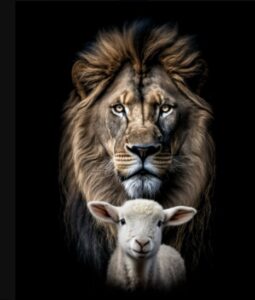 The Christ we preach should be the One we see in Scripture:
- The Lamb awakens: Souls wake up from slumber and bondage to sin. He is merciful, tenderhearted, gentle, wooing hearts to receive His love and come into His kingdom of peace.
- The Lion reigns: He rules powerfully, governing wisely, and warring victoriously to defeat all His enemies. He “retreats before nothing“- Proverbs 30:30
This reminds us of the double offices of Christ we read in Hebrews 7:1-3, where He is compared to Melchizedek, who was a king and a priest.
- Priest– Lamb- Sacrifice offering- interceding for others to bring salvation.
- King– Lion- Supreme Ruling Authority- defeating those who oppose His reign
In Hebrews 7:1-3 we read:
This Melchizedek was king of Salem and priest of God Most High. He met Abraham returning from the defeat of the kings and blessed him, and Abraham gave him a tenth of everything. First, the name Melchizedek means “king of righteousness”; then also, “king of Salem” means “king of peace.” Without father or mother, without genealogy, without beginning of days or end of life, resembling the Son of God, he remains a priest forever.
Melchizedek who is compared to Christ can be seen in Genesis 14:18-20. He blessed Abraham after the latter brought back Lot who was kidnapped, and defeated the kings that had plundered them. Abraham gave him a tithe, which occurred before the Law of Moses, thus establishing tithing as an enduring spiritual principle, not merely a Levite temple obligation [Hebrews 7:6]. He was both the king of peace and king of righteousness, just as he was a priest. There’s no recorded birth of Melchizedek and there’s no recorded end of him. As representative of Christ, He affirms that Christ’s offices are everlasting. He is still able to save to the uttermost those He intercedes for now. And as King, demons still tremble before Him saying: “What do you want with me, Jesus, Son of the Most High God? In God’s name don’t torture me!”—Mark 5:7.
These offices also reveal the identity of His people on earth—they are priests and kings.
Revelation 1:5-6 says:
“And from Jesus Christ, who is the faithful witness, and the first begotten of the dead, and the prince of the kings of the earth. Unto him that loved us, and washed us from our sins in his own blood. 𝑨𝒏𝒅 𝒉𝒂𝒕𝒉 𝒎𝒂𝒅𝒆 𝒖𝒔 𝒌𝒊𝒏𝒈𝒔 𝒂𝒏𝒅 𝒑𝒓𝒊𝒆𝒔𝒕𝒔 𝒖𝒏𝒕𝒐 𝑮𝒐𝒅 𝒂𝒏𝒅 𝒉𝒊𝒔 𝑭𝒂𝒕𝒉𝒆𝒓; to him be glory and dominion for ever and ever. Amen. “
- As priests, we offer praises and prayers to God [Revelation 5:8; Hebrews 13:15; Psalms 141:2; Luke 1:8-9; Matthew 12:3-4].
We see that these Scriptures show how the prayer, praise, and worship ministry of the saints is compared to the incense of Old Testament priests, which burned at the altar in God’s temple, and as the smoke ascended it represented those prayers going up to God. Just like the smell of the incense is a sweet fragrance, prayers that are offered in faith and reverence please God, and bring down His blessing. Somehow king David had touched this revelation, even when he was of the tribe of Judah, not Levi. To a certain degree, David had enjoyed the privileges of priesthood even at a time when his only legal prerogatives were royal ones. We should avail of this great privilege given to us in intercessions, especially. Are our families saved ? Are the people in our environments getting blessed ? Are organizations we lead or simply participate in as members seeing the glory of God because of our prayers ? Do we sincerely and passionately present them before God in prayer ? Are our nations being healed as the Lord hears us from heaven ? Remember how many times Paul wrote in his epistles, “I always thank God for you as I mention you in my prayers.” He is a priestly role model we should learn from [2 Chronicles 7:14; 1 Timothy 2:1-5; 1 Thessalonians 1:2; Romans 1:8, 2 Thessalonians 1:3; 1 Corinthians 1:4, Colossians 1:3, Ephesians 6:18; Luke 22:32; Ezekiel 22:30; 1 Samuel 12:23; Colossians 1:9; 2 Timothy 1:3; Exodus 32:30; 1 Kings 8:36; Genesis 18:22-33]
- As kings, we represent Him in authority on earth to rule over the kingdom of darkness and bring fallen humanity to obedience of His laws and submission of His just rule. This will bring great joy in the nations that are blessed by such holy and positive influence [Ecclesiastes 8:4; Daniel 4: 34-35; Proverbs 20:2; Psalms 2:1-12; Psalms 110:1-3; Luke 10:19; Psalms 97:1-3; Proverbs 29:2].
Christ has given us authority to trample on snakes of scorpions. As far as the kingdom of darkness is concerned, it is under our feet. And as Ecclesiastes 8:4 declares, we can expect our commands to be backed by heaven: “For the word of the king is supreme, and who may say to him, “What are you doing?” There’s no such thing as a king without authority. If we are kings, then we have a domain we rule. This is obviously part of God’s kingdom and is spiritual, but it carries effects on earth, where demons still ruin lives. Now, this doesn’t mean we are not accountable, because we remain subject to Christ’s law. Our public actions and private matters are still under the Lord’s watch, who knows all things, will bring everything to light, and judge everyone according to what they have done [1 Corinthians 9:21; 1 Corinthians 4:3-5; Matthew 5:17-20; Romans 8:4; Romans 14:23; James 4:17; Hebrews 4:12-16; Revelation 22:12-13; Jeremiah 17:10]. He will return and ask us to give an account for the years we have lived on earth, and what we have done with the talents and gifts He had given us. All our opportunities for testifying about His saving grace, opportunities to help those in need, opportunities to yield a greater harvest for the kingdom in whatever positions He has placed us are matters of accountability. We are stewards, not lords, when it comes to standing before the great judge and give a report of how we have used our delegated authority. Yet, we also know that as we go about our missions and ministries in the Lord’s service, we have a high degree of protection from interference. No one shall lay a charge against God’s elects. And while sometimes there may seem to be strife between the Lord’s servants, this principle stands [Romans 14:4].
We belong to an everlasting kingdom and a kingdom that is superior to all the kingdoms of the world, like Nebuchadnezzar finally acknowledged [Daniel 4:34-35]. The words we speak can bring life and destruction. If you choose to abdicate your authority as a king, it is on you, not on Christ. And certainly other saints should not be considered brash if they use their authority properly [Job 22:28; Mark 9:19-23; Mark 11:22-24]. Wherever the Lord is pleased to impart life because people have sought Him humbly, our words will will be blessed by the Lord to release those blessings [Luke 10:5-6]. And wherever the Lord has determined to cause destruction, because people have challenged His authority [Proverbs 20:2], then the judgments we decree will be established [Isaiah 54:14-17; John 20:23; Matthew 18:17; Luke 17:1-2]. He reconciles with mankind through our pleas [2 Corinthians 5:20]. He judges others through our censure [2 Corinthians 2: 10,16; Galatians 1:7-9; 1 Corinthians 16:22; Psalms 47:3; Matthew 28:18-20;Psalms 18:36-47]. Whatever we do in His name, it is the Lord Himself who is doing it [John 14: 12-13; Colossians 3:17; Matthew 10:40; Luke 10:16; Matthew 25:40; Jeremiah 15:19; Isaiah 51:16; Jeremiah 1:9-10; 1 Thessalonians 4:8; 1 Samuel 8:7; John 12:48; Isaiah 49:7; Matthew 12:20-21]. Our character should be as lofty as our authority, in love, in kindness, in excellent works, and in generosity, so that our rule does not emulate the tyranny of fallen kings who rule this world, rather the peace and righteousness of God’s kingdom [Matthew 20:24-28; Romans 14:17]. There should be great joy where our royal presence is [Proverbs 29:2; Acts 8:6-8; Psalms 97:1-3; Esther 8:15; Job 34:30; Proverbs 11:10; Proverbs 28:12].
When I look back at a number of dealings that have been “bittersweet” with people in the world who are not necessarily Christians, I see that there’s a lot the world does not understand about authority, and therefore cannot understand about biblical justice. In the secular realm, it works like what Jesus described it in Matthew 20. Those with greater power are considered benefactors as they lord it over people. You get things because someone is doing you a favor, not because they have a sense of an obligation or service. Unless you learn “to kiss people’s – ashes” [sorry for the term]- then you are not to be favored. This creates a culture of sycophancy where fairness and righteousness cannot thrive because rationality is sacrificed at the altar of seeking favor with the powerful [Proverbs 29:26; Psalms 101:7; Psalms 5:9; Romans 3:13; Romans 16:18; ]. While Scriptures tell us to be circumspect with those who are outside [Colossians 4:5], at what point would bending to the whims of the powerful and power-hungry be considered a compromise of our Christian testimony ? I would argue that our role in the world is not just winsomeness towards the unbelievers, because that alone does not bring to light the knowledge of sin, and without the knowledge of sin there can be no conviction, and with no conviction there can be no repentance or salvation [Romans 4:15; Romans 7:7]. So, while we must avoid being overbearing in how we relate to those who are outside, for after all we see Daniel being used of God to touch the entire Babylonian system without being too noisy about his Jewish beliefs, we also must make sure we are being sensitive to the Holy Spirit where lines are drawn. Carry the character of the beatitudes of Matthew 5, and yet at the same time realize that even Jesus and Paul asked why they were being slapped [John 18:23; Acts 23:2-3]. Clearly both Jesus and Paul understood the boundaries of “turning the other cheek.” Right and wrong must be clear in the eyes of the world, even when they do not want to hear about it. This could create friction, but ultimately we carry greater authority, as we belong to a superior kingdom. We want to be sweet and approachable, but we also should keep in mind our Kingdom identity. If our values, interests, wellbeing, and properties are unduly hurt, violated, or infringed upon, then we can appeal to the “judge of all the earth”—Genesis 18:25; Psalms 58:11. We are not victims in the face of injustice, slander, selfishness, abuse, and wickedness we see all around us, we are victors and kings. Ultimately we hold the keys of the kingdom and we can use them to bind and loose [Matthew 16:19; Matthew 18:19; Psalms 149:4-9].
The Messianic Psalms, especially 2 and 110, should be memorized by those who want to grasp this kingdom reality and Christ’s double offices. The fact that we see Psalms 2 quoted by the apostles in Acts 4:25-31 should embolden us in using these Psalms with high expectations. It is not proud to expect what God promised.
SECTION 3: SCRIPTURAL HARMONY AND THE TENSION OF BALANCE
Our generation knows little of the “terrors of the Lord”—2 Corinthians 5:11, since many preachers have ceased being persuasive about turning men from darkness to light, and some who attempt to do so are fainthearted.
Read these Scriptures:
- Psalms 97:3, A fire goes before Him, And burns up His enemies round about.
- Deuteronomy 9:3, But be assured today that the LORD your God is the one who goes across ahead of you like a devouring fire. He will destroy them; he will subdue them before you. And you will drive them out and annihilate them quickly, as the LORD has promised you.
- Revelation 6:15-16, Then the kings of the earth, the princes, the generals, the rich, the mighty, and everyone else, both slave and free, hid in caves and among the rocks of the mountains. They called to the mountains and the rocks, “Fall on us and hide us from the face of him who sits on the throne and from the wrath of the Lamb!
- 2 Corinthians 10:6, And we will be ready to punish every act of disobedience.
- Psalms 82:8, “Arise, O God, judge the earth”
- Psalms 64:7, But God will shoot them with his arrows; they will suddenly be struck down.
- Exodus 15:7, In the greatness of your majesty you threw down those who opposed you. You unleashed your burning anger; it consumed them like stubble.
- Deuteronomy 4:24, For the LORD your God is a consuming fire, a jealous God.
- Psalms 78:49-50, He unleashed His fury against them, wrath, indignation, and calamity–a band of destroying angels. He cleared a path for His anger; He did not spare them from death but delivered their lives to the plague.
- Hebrews 12:29, For our “God is a consuming fire.”
When was the last time you heard a series on temporal judgment with the above Scriptures quoted ? On God being a devouring fire ? On the revealed wrath in heavenly places and the punishments that God inflicts, not as a future possibility, but as a present reality ? It seems to me that over the last several years, as more and more Christians have focused on God’s mercy, His justice has gone to the back-burner, which has hurt the way people see or recognize His character. Obviously we do not want the opposite. We do not want people to be so focused on judgment that they will forget mercy altogether. I can say, as someone who wrote the book, “My Christian Confession” long before I got the revelations on the “Triumph of Christ,” being immersed in doctrines of redemption and grace as a young believer helped me weather many storms that I might not have been able to overcome had I come from a theological background of those with strong religious rules that push people into a sort of frenzy. I have heard not-so-good stories of some of the negative things that happened during the First Great awakening in Northampton, Massachusetts, because of misunderstandings that arose from Jonathan Edwards’ sermons. We really must make sure that people who hear the messages we teach do not get a skewed image of God. We do not want people to think that there’s no such a thing as an angry God. At the same time, we do not want people to assume that the only nature of God that exists is the one of fury.
So, it is important to learn how we can hold these two truths in balance.
- Ephesians 4:15- Speaking the truth in love
- 1 Corinthians 13:6- Love does not delight in evil but rejoices with the truth.
Just like mercy and justice are in a sort of tension throughout Scriptures, something that catches many false teachers, as they will tend to bend to one side or the other, with the 21st century seeming to be one in which some prefer to bend to the mercy side at the expense of divine justice, we also see the same with truth and love. If we look at Scriptures like Romans 11:22 – the kindness vs the severity of God- or passages like Psalms 85:10 & Exodus 34:6-7 & Hebrews 7:1-3, then love represents Jesus as the Lamb of God and truth would represent Christ as the Lion.
We often see Christians of all stripes who want to separate these two aspects of Christ’s nature. You might have seen those who emphasized the kindness of God and wanted to avoid the severity of God or those who want to talk about mercy but ignore divine justice, there are also those who want to talk about God’s love while ignoring the truth. One of the most gripping revelations when I was growing into the teaching of temporal judgment, was realizing, around 2017, that people who would be deceived by the Antichrist were those who did not love the truth [2 Thessalonians 2:10 ]. What is interesting in that verse isn’t that truth and love are not juxtaposed as either/or – and are not even as BOTH- they are rather stuck together- “they did not love the truth.”- So, the truth can be loved or hated. Not loving the truth is what will open the door for the Antichrist. Since the church will be raptured at the time the Man of Sin is revealed, we probably do not need to worry now whether we will be deceived into getting the Mark of the Beast [Revelation 13:6-7]. We won’t go into details what this Mark of the Beast will be. It is also of no much help to worry that we could be among the deceived as we won’t be here. However, as long as we are here, the strategies that Satan uses to deceive people is the same. He usually walks around like a prowling lion that devours people who do not have a coherent biblical theology. They don’t have that theology usually not because they lack books to learn it, but because they actually don’t care.
Look at Union Theological Seminary in New York. Wheaton College in Illinois. Duke Divinity School in North Carolina. Going to these places for theological training is as good as staying home, perhaps even worse than staying home. But they have nice and beautiful libraries. They probably have more more books than many smaller Christian colleges. You might assume that the number of their books is due to loving the truth, even though you can hardly find the truth there. People love “love, ” not as in the way Scriptures present it, but rather the romantic sense of it they have concocted in their heads. Loving “love” as a twisted demonic teaching is the trap that has caused many to hate the truth. So, even though we are not yet in the great tribulation, many people are still being deceived because they don’t love the truth. The Bible says, without holiness none shall see the Lord- Hebrews 12:14. And guess what, you will find preachers and theologians who will use John 3:16 or Romans 4:5 to tell you that believing in the blood of Jesus and being justified will help you annul Hebrews 12:14 . That’s ignorance of Scriptural harmony and losing the balance of the Bible.
Let’s pick the example of John 3:16 being mistaught. What does John 3:16 teach ? Of course it is the love of God, so deep, so moving, that It has given us His beloved Son, Jesus. But does God’s love alone save ? Let’s think. Everyone who is in hell was loved by God before they went there. So, we can’t just accept the false hope that God’s love, general love, general offer of salvation, is all we need to know to be saved. If the love of God does not bring us to love the truth of God, that in Christ alone, His Word, and His grace we shall find salvation [John 17:3], then we have been deceived. God love you, but salvation is obtained according to divine principles of His truth. When you read John 3:17-20, you see how John might have wanted to make it clear that John 3:16 should be kept in context. I have seen people who are excited to read John 3:16 and then they cool down when they read: he who does not believe is condemned already [John 3:18]. How ? It is the same book, the same author, and the same chapter. It is just that people have developed selective hearing and want only to focus what their itching ears want to hear. That’s how Scriptural harmony has been lost. The word “believe” can mean different things to different people. To some it can simply mean a mental assent, that even demons are said to have [James 2:19]. To others, it can mean the active faith that makes believers start to obey God and “act on His words”- John 6:28-29, Romans 10:17, James 2:17. Obviously, just like God’s love can be misrepresented, there are wrong ways to preach the truth. There are people who claim that they are pursuing the truth, but then later you realize that it is only about building sects and cliques. “Truth” has a totally different meaning for such people, because it is simply a tool for inclusion or exclusion of people in their little groups, movements, and denominations, and has nothing to do with Christ’s intent. So, we must genuinely learn to “speak the truth in love“- Ephesians 4:15. So, let’s avoid both traps. The trap of teaching on God’s love while ignoring His expectations, because when we allow evil to flourish and establish roots [1 Corinthians 13:6], we are not really presenting God’s love right. And on the other hand, when we use truth only as a way of presenting selective facts that will strengthen our position, denomination, and like-minded groups while ignoring other truths that are as important and would promote understanding among differing people, unity, and love, we are also doing wrong.
There’s no love without truth and there’s no truth without love. But someone may object: “Sometimes truth hurts. Should we really follow it at all times?” It is true that sometimes truth will hurt and carnal nature may seek to protect relationships and personal interests at the cost of the truth. However, let us think. Who is likely to be hurt by the truth ? Is it holy angels who serve God zealously ? [1 Timothy 5:21-22] Is it mature saints who have walked in the ways of the Lord faithfully ? [3 John 1:4] Is it Jesus Christ who sits on the throne, who “loved righteousness and hated wickedness,” and was therefore anointed above all His brethren ? [Hebrews 1:9]. No, those are not the ones who will be hurt by the truth. It might hurt those who are in error. It might hurt those who have been deeply entrenched into sin and can’t get out of bondage. It might hurt those who have changed their bodies or behaviors to the extent they feel like repentance is a big cost for them. It might hurt those who find it difficult to accept the things of God because they offend their natural minds. That’s why the truth should be spoken in love. That’s why those who speak the truth should avoid hurting people’s feelings unnecessarily. The truth has its own offensiveness to it and we do not want to add on human baggage when we share it. Make no mistake, the truth itself, as revealed in Scripture, cannot be apologized for. It cannot be watered down. Does it matter what sinners think about John 3:18 , Acts 4:12 ; 2 Corinthians 13:8; John 20:23 ; 1 Corinthians 4:17-21 ; 1 Peter 4:17 ; Revelation 2::23; Acts 13:9-13; 2 Corinthians 10:6; Psalms 149:5-9; Hebrews 10:3 ; Mark 8 34-38; Romans 2:2 ? Does it matter what the liberal preachers think about these verses ? Does it matter what false teachers and prophets would say about them ? No! It doesn’t matter. The truth remains the truth. We can only comply and submit to it. We cannot actually change what it says. We should rejoice when the truth is revealed, if indeed we have God’s love in us [1 Corinthians 13:6]. If we are rattled when the truth is revealed, we don’t actually have the love of God, but rather the love of the world [1 John 2:15 -17].
The love of the Father and the love of the world cannot coexist in the same heart. This is why Scripture says that he who loves the world cannot have the love of the Father. The world simply stands for all things and all people who oppose, suppress, deny, and obfuscate the truth [John 17:14 ]. Yet, as Paul understood, whether in the church or in the world, the truth cannot actually be opposed successfully [2 Corinthians 13:8]. Those who try to do so will be humbled by it. The truth is the only weapon that the church’s foundation is built upon [1 Timothy 3:15]. Besides the church, the truth maintains the world’s morality in balance [Ephesians 6:10-18; Hebrews 1:3; Matthew 24:35; Psalms 119:89]. Where lies have been unleashed, tyranny has not been far away. So, the truth is a bulwark against oppression.
SECTION 4: THE CHRIST WHO WAS AND THE CHRIST WHO IS.
To avoid being unnecessarily long, this section is written in quick points to summarize theological matters that might have otherwise taken long to explain.
- Point 1– Good resources. One of the “older” books on Dominion Theology that I like is the one TITLED Prince Messiah: Mediatorial Kingdom of Christ. It’s written in 19th century by a solid Scottish theologian named William Symington. Rather than spend several hours teaching on dominion theology, I would rather point people to this book so that they can go and quickly learn things I might not have that much time to teach on.
- Point 2– Understanding the difference between the mediatorial reign of Christ and the millennial reign of Christ- mostly from Puritan authors [and their theological heirs] has been a huge breakthrough for me since I discovered it. A good comparison has been David Vs Solomon reigns. These were different and each is a type of Christ representing His kingdom in a certain dispensation.
- Point 3– David can be read in Samuel and Psalms. His kingdom was mostly war. He was actually denied to build the temple because he had shed a lot of blood in war. Solomon can be seen in Kings and proverbs. He was a man of peace. David represents the church— kingdom now. The kingdom the way it is now. Tribulations. Persecution. Fights. Solomon represents the millennial kingdom. Peace. No wars ( Isaiah 2, Isaiah 9, and Isaiah 11). Why did this give me so much breakthrough ? I realized I needed a Davidic approach to warfare. We don’t actually have peace free from warfare during the church age. We can only determine we will win victories for the Lord. Most losses you find Christians have are due to lack of WILL/WILLINGNESS TO FIGHT. David didn’t have that. Most his battles won were 50% completed before he even engaged into battle as this readiness alone will prepare a warrior. Without such an eschatology, Christians are happy to see events dictated for them as they don’t know they are in charge. The day you get this Davidic mindset — to realize that you are actually in charge of events and nobody can or should dictate them for you, your family, and the church — you will be the first to be shocked. This eschatology of kingdom now isn’t just true, it actually works. Why ? It puts you to fight. It puts you to work. You do not just prophesy, you wage a good warfare in accordance with the prophecies spoken about you [1 Timothy 1:18; Psalms 89:19]. You become part of the fulfilling agent of what has been spoken prophetically. Many prophecies fail simply because people think God will do things automatically. They go to sleep and forget that their co- laborers with the Lord. Now you understand why you might have been defeated in certain areas. This whole time you were a slave to the beggarly elements of the world thinking you were giving God a favor. You couldn’t cast out demons. You could hardly have a livable city. All great companies were run by the ungodly. The wicked ruled your nation and you complied. No wonder Satan loves to twist the idea that since Jesus told Pilate his kingdom was not of this world, it also meant that Jesus had no throne anywhere. He was just a simple servant who came to teach us how to suffer well. Of course Satan who comes to steak, kill, and destroy would want Christians folding their hands as he ruins and maims. Things change when Christians develop an overcomer’s mindset.
- Point 4– Before Jesus was born, Isaiah 9:6-7 prophesied “unto us a child is born…the government shall be upon His shoulders.” This is an important Scripture to understand about the kingdom of Jesus Christ.
- Point 5– A charge Jesus had to answer before Pilate was whether He was King of the Jews. Jesus admitted that He was- Luke 23: 3
- Point 6– What seems to have been an issue for many to understand Christ’s kingdom application during the church age was that He said “My Kingdom is not of this world“- John 18:36. BUT HE ADDS: “my kingdom is from another place” Where is that place ? Heaven is that place. See Acts 2:24-36 passage. When Peter was preaching on Pentecost he quoted the famous Psalms 110. He also mentioned that Jesus had now been enthroned at the Father’s right hand. From this we gather that the Jesus who was born as a baby in a manger, was a prophet and teacher during His days on earth, suffered and died for our sins- and rose from the dead according to the Scriptures, was exalted when He ascended- and the time He sat on the throne after ascension marked the beginning of His post mediatorial work reign. This is what we commonly called the mediatorial kingdom of Christ. He has been administering since that time. Christ is king now, not waiting to become one at a future date. In the book of Revelation, apostle John has a vision of Jesus. The Jesus Christ he sees there looks much different from the man on whose bosom he had laid. Indeed, when John sees Him at first, with blazing eyes of fire and a sword in His mouth, the first though he had was not to lay on his bosom, rather to tremble and fall before Him, “as though dead”- Revelation 1:17. The Christ of Bethlehem was born as a poor baby and ran away from Herod. The Christ of Nazareth did carpentry for sometime before He was revealed at the Jordan River after baptism under John. The Jesus who preached throughout Galilee and Judea was a meek itinerant healer who brought joy to many while being opposed by Pharisees. The Jesus who suffered, was spit upon, was given a crown of thorns, mocking salutes by Roman Soldiers, and crucified for our sins was the “Man of Sorrows” prophesied by Isaiah 53. The Christ who rose had entered a new phase of His earthly journey, now proving to His disciples that He had won victory and He was indeed who He had claimed to be all along, the Son of God, the Savior of the world. Now this Christ is seated on a throne in heaven and is known as the “Lamb upon the throne” or the “Lion of tribe of Judah”- It is a position that evoked “weep not” [Revelation 5:5], when John saw the scenes of what was happening, and nobody else was found worthy to open the scrolls. This Christ will soon rapture His bride, the church, and after we spend some time at our mansions in glory [John 14:1-3; Revelation 19:7-11], we will come back down with Him. His kingdom is an everlasting kingdom. He was, He is, and He is to come.
2020
Devotionals, Second Week of December
December 8th, 2020
Jesus replied, “My mother and my brothers are all those who hear God’s word and obey it.” – Luke 8:21
As we start the second week of December, the theme for the second week will be “Trust and Obey.” Inspired by what the Lord showed me this morning and the Old hymn written by John. H. Sammis that goes like this:
When we walk with the Lord, In the light of His word, What a glory He sheds on our way ! While we do His good will, He abides with us still, And with all who will trust and obey.
Trust and Obey, For there’s no other way, To be happy in Jesus, But to trust and obey
For contemporary singing of this song, one can check out Don Moen’s play of this song. The words of this song are actually inspiring because, often when God speaks to us, there’s joy and pleasure in obeying, and when we disobey, there’s often a nugging as though we are being harassed by the Spirit, and that kind of emotional dissatisfaction can be quite painful.
Whenever we hear of inspirational stories of how some people’s lives were changed, we tend to associate that with some kind of life-altering events whether moments of crisis or favor for breakthrough, but upon a closer look of Scriptures and the lives of the saints in general, we discover that, often the way our lives are changed is through daily listening to the Word of God and obeying it in what often may look like mundane routine. This is why the Luke 8:21 verse will open our theme this week.
Jesus spoke these words when someone mentioned that his mother and brothers were standing outside waiting for him. It seems like Jesus had these moments when his family would come by where He was ministering, like the time he and his disciples skipped lunch as they continued to minister to people and the family thought he had become insane ( Mark 3: 20-21). So Jesus took that opportunity to talk about spiritual connection to Him and not biological kinship. His brothers and sisters were already standing in front of him listening. It was Peter, John, James, and all the people in the crowd who hung on His words ready to put it into practice.
I have heard a great deal of the honor Jesus has given us when He said that He no longer calls us servants but He has called us friends. This is often quoted as foundational to knowing His mysteries since He tells us everything (John 15:15). But if He calls us brothers when we obey Him, then that elevates us from just mere friendship to kinship. We become co-heirs. A friend may know a lot of secrets about someone’s life, but he does not share in family inheritance. Our obedience to God brings us that kind transition from knowing secrets to managing the family’s inheritance.
Prayer: Father God, I thank you that you have brought me into your family through the new birth and your Son, Jesus, is my brother. I am honored and thrilled by this kinship. Lord, I also thank you for having entrusted to me your very words. They are life-giving and flow with love, joy, and peace. I pray, Father, that you may continue to work in me both to will and to do according to your good pleasure that I see in the words you speak to me daily. In Jesus’ name, I pray. Amen!
December 9th, 2020
For God knew his people in advance, and he chose them to become like his Son, so that his Son would be the firstborn among many brothers and sisters- Romans 8:29, NLT
Obedience for the Christian has a purpose: it is “Christ-likeness.” He is our Big Brother and we are to be conformed to His image. It’s like looking yourself in the mirror. What do you see? You. The Father wants His own image restored in the people that He created for His own glory. The way this transformation and conformation occur should not intimidate because God does it all by grace, which is why we are to “Trust and Obey.”
How? First, the Father chose us. “You did not choose me, but I chose you.”- John 15:16 and “ All those the Father gives me will come to me, and whoever comes to me I will never drive away.”- John 6:37. The Lord called us and saved us “While we were without strength.”- Romans 5:6. I like that view of our starting point. It helps us not just trust the Father and obey Him, it helps us trust the process, too. Realizing that His ways flow from who He is, as a good Father. Some English translations use “powerless” instead of “without strength” and the Greek word used for that is “Asthenon” which means “weak or infirm.” From a moral point of view, the fallen sinner cannot change himself, even if he tried, he would fail. A non-Christian cannot become Christlike because this transformation requires “Christ in you.”- Colossians 1:27.
I heard an interesting story of how a famous political leader who changed the world read the words of the sermon on the mount and was impressed by Jesus and wanted to follow Christ’s ways. While he did do many good things, there’s no record that he ever got saved before he died. He was not alone. Since then, there have been many political transformative leaders who embraced non-violent means of social change and yet failed to embrace the Gospel as their power for that transformation. This is where lies the problem. Lasting impact can only come through Christ. Thinking “what would Jesus do?” is not enough. “Christ in you” actually has to do what Jesus would do because only Him can do that. This is our second point to take note of.
“Christ in us” is why we should not be intimidated by obedience. This is why “His commandments are not burdensome.”- 1 John 5:3. His grace is made perfect in our weakness, so we do not need to look to ourselves. We just need to depend on Him. If a father was with his toddler son trying to climb stairs, would the father laugh mockingly if the toddler collapsed a few stairs to hit his head downstairs? Unless that father is a psychopath, that’s unthinkable. Our heavenly Father would lift His children in such circumstances (Isaiah 63:9) and then take their hands and guide them (Psalms 32:8). That’s what He does each time we hear Him speak. The voice of the Lord carries the power to accomplish what God sends it for. Whether it is through Scriptures or through revelations that He speaks into our spirits, it has the power to change our character as well as spur us into action for what needs to be done. As we yield to what He speaks, His words will become spirit and life to us, gradually conforming us into the image of His own son.
Prayer: Father God, I thank you that you sent your Son to die for me while I was without strength. I also thank you that you speak to us your precious words every day and your power to teach, guide, transform, and grow us into the likeness of your Son is clearly manifest. Help us learn more and more how we can yield to the work of your Spirit so that we can increase into the full stature of Christ. In the name of Jesus, we pray. Amen!
December 10th, 2020
Do not conform to the pattern of this world, but be transformed by the renewing of your mind. Then you will be able to test and approve what God’s will is–his good, pleasing and perfect will- Romans 12:2
“Christ in you” makes obeying God’s commandments and the sanctification process for the Christian possible. It is the reason we understand why being born again is vital for everyone. The religious person who is not born again simply cannot handle the burden of fulfilling God’s requirements and meeting His expectations. Paul writes as much in Romans 8:4, where he clearly states that the demands of the law that had been too much for him in Romans 7 were now being met by living by the spirit.
After we are born again, we understand that “If anyone is in Christ, he is a new creation, the old has passed away, the new has come”- 2 Corinthians 5:17. Our goal becomes walking according to the new life and putting behind the old life. This is important if we are going to be conformed to the image of God’s Son, Jesus Christ, who is our Big Brother, and grow in our Christlikeness. “Do not conform to the pattern of this world” means that we should no longer look around us to see what is fashionable and follow it. What the world says no longer shapes our opinion. This applies to every area of life. From how we dress, to what we watch, to what we read, to how we spend our time and money, the way we approach relationships, work, and basically everything. When Peter tells women that their beauty should not be outward, coming from ornaments and such, he is not being petty (1 Peter 3:3). He is conveying what the Spirit is saying about how not to conform to the pattern of this world in regards to beauty. Because, for the Christian, the most important is the “inner self” and “heart”
In order not to conform to the pattern of this world, we need to have our minds renewed. We need to have the mind of Christ, so that the Christ who lives in us can do what He alone is able to do. When Israel left Egypt, some still struggled with the wilderness life and wished to go back to Egypt. In the same way, some Christians may still have residues of a worldly lifestyle without even realizing how detrimental it is to the pursuit of Christlikeness. “Remember Lot’s wife.”- Luke 17:32. The world we leave behind should no longer inform our future, no matter how shiny it looks. An analogy we can use in our modern times is like the way we program and deprogram computers. This is how we need to renew our minds about money, relationships, significance, and a host of other issues that shape our lives and future. Reading the Scriptures clearly plays a role in helping us to renew our minds and so is listening to the Word preached and also having the mentorship or discipleship with people who are ahead of us and have already learned and practiced the things we are learning anew. Even following Christians on social media helps because “Iron sharpens Iron”- Proverbs 21:17 and with these new tools we can learn from so many people. It helps us discern what God’s will is because we cannot obey what we do not know.
Prayer: Father God, I thank you that you have given me a new life in Christ and I do not have to feel burdened by what you command me to do. I pray that you help me as I seek how to renew my mind so that I can have the mind which is in Christ and the Christ who lives in me can continue to grow me into the holy and obedient person you want me to be. In the name of Jesus, I pray. Amen!
December 11th, 2020
Do not merely listen to the word, and so deceive yourselves. Do what it says. Anyone who listens to the word but does not do what it says is like someone who looks at his face in a mirror and, after looking at himself, goes away and immediately forgets what he looks like. But whoever looks intently into the perfect law that gives freedom, and continues in it–not forgetting what they have heard, but doing it–they will be blessed in what they do- James 1:22-25
These 4 verses in James 1 are very helpful for our theme this week of “Trust and Obey.”
In Verse 22, he draws our attention to the fatuousness of merely listening to the Word. The Word of God is powerful but the parable of the sower (Matthew 13:1-9 and 18-23) should correct our wrong thinking that merely hearing the Word of God is salvific. Sure, Paul asks “How, then, can they call on the one they have not believed in? And how can they believe in the one of whom they have not heard?”- Romans 10:4, which tells us that for pagans or unevangelized lands, we cannot just expect that they will start to believe in Jesus spontaneously without hearing the Gospel. But our James 1:22-25 confronts the issues raised in the parable of the sower that make the Word ineffectual for those who have already been evangelized or have Christianity in their culture. They do not lack preachers, they may even have more per capita than other places, they lack obedience. They merely enjoy listening to the Word, but it does not affect how they live. They “deceive themselves.”
In Verse 23-24, he gives an analogy of looking oneself in the mirror and then immediately forgetting how one looks like. First, if we were to look at what this means from a physical point of view, the absurdity of it means that if someone had a twin brother and walked in the street after forgetting how he looks like, he would pass by his brother without recognizing him. But this analogy is supposed to alert us to something deeper, and more spiritual, like what Paul alluded to when he said “Now we see only a reflection as in a mirror.”- 1 Corinthians 13:12. The issue here is that since we walk by faith and not by sight, what is described to us in the Word is more like a mirror reflection. You can’t stretch your hand and greet the person in front of you. You can’t attempt to run into the mirror to meet that person. It is merely a reflection of the one standing behind the mirror. We were created in God’s image, but as fallen creatures, we no longer have that. The redemption Christ brought is our hope to restore that image, and throughout the Gospels and the New Testament, we see what it means to be Christlike. He is the last Adam. He is the one we should look like. He is the first-born brother we are supposed to have similarity as those seen in twin brothers and sisters. That’s what we are supposed to be seeing in the mirror of God’s Word as we read it or hear it preached. But if we go out and forget that, then this analogy applies to us.
In verse 25, James tells us how the Word we hear will bear fruits for the kingdom of God. It will start by looking in the mirror, of course, “looking intently into the perfect law of liberty.” And seeing clearly “the truth as it is in Jesus.”- Ephesians 4:21. It is that truth that gives us liberty (John 8:32), as we are saturated with the presence of His Spirit (2 Corinthians 3:17), and allow ourselves to be carried in that anointing from the Holy One wherever we go and whatever we do, letting the Word of God influence our thoughts, words, and actions, in a such a way that they are all in continuing harmony with “the truth as it is in Jesus.” This is how we will be blessed in whatever we do. Now, Christians with a slave mentality will miss the part “they will be blessed.” It’s like they want the instructions of the Word without the blessings attached to obeying the word. That’s basically being an unbeliever. Faith means we believe what the Word of God promises, all of it. The word “blessed” in Greek here is “makarios” and it means a “happy person who is to be envied.” Paul tells us that this is one of the goals of preaching the Gospel in Romans 11:14. He hoped Jews would be envious of the Gentiles and because of that, turn from their error to the Gospel of Jesus Christ. So, if we do not want to be blessed, are happy with just the instructions manual, not the blessings that accompany obeying the Word, we are missing the point of causing people to be envious of what we have become in Christ, and creating thirst in them to rush for the living waters, so that they can get some for themselves and be satisfied, too.
Prayer: Father God, I thank you that I see your Word full of Christ in all His glory. I see your Son who taught beautiful and wonderful words of life, who healed the sick, raised the dead, and gave His life as a ransom for me, and then rose victorious, and is alive today. The Christ who sits upon the throne, the soon-returning King. I pray, Father, that you help me prepare myself to meet your Son, so that when He appears, I will be gloriously transformed like He is. In the name of Jesus, I pray. Amen!
December 12th, 2020
Observe them carefully, for this will show your wisdom and understanding to the nations, who will hear about all these decrees and say, “Surely this great nation is a wise and understanding people”- Deuteronomy 4:6
The blessings of obeying the Word of God are many and do not just apply to individuals. They can also be seen throughout Scriptures to have corporate and national implications. A pastor who is obedient to God will be blessed, his family will be blessed, his church will be blessed, and if we were to see such obedience at state level, with all churches in the state walking in obedience to God, that entire state that is blessed with those churches would be blessed as well. We see this model throughout Scriptures.
In the Deuteronomy 4:6 verse we have today, we see that the obedience that was commanded to Israel would result in making the nation to be respected in the eyes of other nations. It’s not uncommon to hear political leaders talk about “our standing in the world.” And it seems that God did care about such standing in the world for the nation of Israel. Yet, it is these same commandments that would have given them dignity that they broke with catastrophic consequences. First, it started with idolatry as they lost sight of Jehovah and what He had done for them. Then, they started to feel that the laws for worship of Jehovah were more of a burden than a blessing, that they were impractical. In Malachi 1:13, for example, we read their attitude about sacrifices they had been instructed to make. “And you say, ‘What a burden!’ and you sniff at it contemptuously,” says the LORD Almighty. “When you bring injured, lame or diseased animals and offer them as sacrifices, should I accept them from your hands?” says the LORD” God had given them so much but they were not giving Him their best as He had instructed. Thank God that, for us in the New Testament, we need no such sacrifices as Jesus has shed His blood for us and He is the perfect Lamb of God who takes away our sins. And yet, If God commands something to us today, like He had done for Israel, it is for our good and there’s blessing in obeying, which they seemed to have ignored. This was a direct violation of what was instructed in Deuteronomy 15:21. Their disobedience also extended to the Sabbath. They broke it and when they did, God allowed them to be taken into captivity for 70 years just so the land would enjoy its Sabbath rest that they had deprived it (2 Chronicles 36: 21). Then many other sins like violence, debauchery, marrying foreigners who did not know Jehovah, followed suit. God’s name was blasphemed among the gentiles because of Israel (Isaiah 52:5; Ezekiel 36:20; Romans 2:24). This had serious consequences for Israel. And today, God is still as zealous for His name as He has ever been. Obedience still matters. We have to find out what God’s will for our lives is and obey Him.
Compare these consequences of Israel’s sin with its apogee during the reign of Solomon, the son of David. Solomon’s fame because of his wisdom went far and wide to the point the queen of Sheba came all the way from Africa bringing treasures to the king. She had tough questions to ask and he answered them. She concluded: “The report I heard in my own country about your achievements and your wisdom is true. But I did not believe these things until I came and saw with my own eyes. Indeed, not even half was told me; in wisdom and wealth you have far exceeded the report I heard. “- 1 Kings 10:6-7. The reign of Solomon is a type of the coming Millennial reign of the Messiah and yet it gives us a taste of possible blessings a nation can enjoy when God is given His rightful place. “Blessed is the nation whose God is the LORD, the people he chose for his inheritance.”- Psalms 33:12.
Prayer: Father God, I thank you for all the blessings that you have promised to us when we obey your Word. Individual blessings, the blessings for the church, and the blessings for the nations that honor your Holy name. Father, we pray that you give us the strength and courage to put you first and follow what you have taught us, so that your name will be revealed among those who do not know you and you will be glorified among them. In the name of Jesus, we pray. Amen !
December 14th, 2020
In Damascus there was a disciple named Ananias. The Lord called to him in a vision, “Ananias!” “Yes, Lord,” he answered. The Lord told him, “Go to the house of Judas on Straight Street and ask for a man from Tarsus named Saul, for he is praying. In a vision he has seen a man named Ananias come and place his hands on him to restore his sight.” “Lord,” Ananias answered, “I have heard many reports about this man and all the harm he has done to your holy people in Jerusalem. And he has come here with authority from the chief priests to arrest all who call on your name.” But the Lord said to Ananias, “Go! This man is my chosen instrument to proclaim my name to the Gentiles and their kings and to the people of Israel- Acts 9:10-15
In the first century, Damascus, in current Syria, was a big Christian center. Saul, whom we know as apostle Paul, had gone there on a mission to shut down the city Christian community. He planned to drag them, get them beaten, and possibly some of them could have been stoned to death. He had already done that in Jerusalem. On his way to Damascus, he encountered the risen Lord Jesus Christ, fell to the ground, the dazzling light blinding him, and he heard from the Lord that he was actually persecuting Jesus Himself. “It is hard for you to kick against the goads.”- Acts 26:14, he heard. Meaning that resisting Jesus’ will to spread the Good News was a futile endeavor. Saul then wanted to know what the Lord desired him to do and Jesus told him to continue his journey into Damascus and wait for new instructions. It is at that time we see the Lord revealing Ananias about all of this and sending him to pray for Saul.
First, the Lord calls Ananias by name. He knows all our names. Some young Christians can sometimes feel that they are insignificant in God’s eyes, to the point that God does not even know who they are, but He knows all of us by name.
Second, the Lord sends Ananias to a specific location, He tells him the house and the owner. We do not know if this was a day vision or night vision, which could be like a dream. It is possible for both interpretations. What matters is that Ananias was aware this was Jesus giving him instructions in a vision. The Lord had also orchestrated a similar vision with Saul, who had seen Ananias come to lay hands on him. At that time, Saul was actually physically blind. So, the vision he had was clearly spiritual in nature and was not what you would call “an open vision,” since his eyes were blind. We have to come to a realization that even though the Scriptures are the most glorious way God speaks to us through, they are not the only way God will speak to us. We may hear his voice in our spirits. We may see dreams in the night. He may use coincidence in events of providence. He may use another person. God has many ways to speak to us. Of course, we always have to make sure it is biblical.
Third, Ananias was reluctant to go. He had heard a lot of negative news about Saul, but Jesus knew the change that had taken place. This should encourage us that Jesus can save the most wretched and hopeless sinners. Even those who zealously persecute the church can be saved by Jesus. Pharisaism did not prequalify Saul to encounter Jesus and secularism or atheism are not roadblocks to Christ making His way to a sinner. Jesus can change anyone’s heart in an instant. He finally convinced Ananias not to be paralyzed by fear and just go to do what He was instructed. Ananias obeyed. If Ananias had resisted these instructions, Jesus would have been able to find someone else to do it. But it would not have been a testimony of submission on Ananias’ part. We call Jesus ‘Lord’ because we are prepared to obey Him. In fact Jesus asked, “why do you call me, ‘Lord, Lord,’ and do not do what I say ?”-Luke 6:46. We are truly and only then saved, if Jesus is our Lord, in fact. By calling Jesus ‘Lord,’ we acknowledge our submission to His will. If this is not the case, then He is neither our Lord nor Savior. Ananias followed the instructions knowing that Saul had been called to be a minister of the Gospel. I believe that there are future Pauls-Peters-Billy Grahams- Reinhard Bonnkes- who are still out there, waiting for someone like Ananias to come and help them out in their spiritual darkness.
Prayer: Father God, I thank you that your grace is irresistible even to the most hardened sinner. If this were not so, we would be hopeless as we would be left to our own devices. Thank you for the salvation of apostle Paul and the great ministry he had in his generation that left us with so many rich revelations of your person, will, calling, and plan for the church of the gentiles. We pray, Lord, that you call more laborers into your vineyard who are as passionate for your kingdom’s expansion like he was. Father, also help us to be like Ananias, instruments in obeying your will and bringing those people into your plan. In the name of Jesus, we pray. Amen !
2020

Devotionals, First Week of December
We look forward to sharing a daily devotion with you. May God bless you as you follow along on the journey to learning and meditating on God’s word. Make sure you do not miss the next day’s devotional to be infused with hope daily.
December 1st, 2020
Their malice may be concealed by deception, but their wickedness will be exposed in the assembly- Proverbs 26:26
This verse comes following a few verses that show us how lies, deception, malice, and wickedness go together; how they are conceived and birthed in the heart, how they are expressed on the lips, how they are concealed from the intended targets who become victims, and how they are eventually exposed in public.
In Proverbs 26:23 we see that smooth words are compared to a shiny silver lining the outer part of a clay pot. This verse starts this passage of Proverbs 26:23-26 that has a similar theme with what we read in Matthew 23:25-28. In that Matthew passage Jesus talks about how pharisees appeared clean on the outside, but on the inside they were full of greed and self-indulgence. Jesus called them hypocrites. The Greek word used is “hypokritai” which means “an actor under an assumed character.” Think of Arnold Schwarzenegger in the movie “True Lies.” He is a spy in the real world but he appears to his family as a salesman. While in the movies such plots may be created when the actor is hiding identity for good reasons such as protecting his family, in the real world, the motivations are usually dark, concealing “greed and self-indulgence.”
Greed is the love of money. The Greek word used is “harpages” which means plunder. Taking other people’s data, resources, assistance, or money by manipulative or forceful practices. Self-indulgence is “akrasias” in Greek and it means “incontinence, intemperance, lack of restraint.” There’s usually a relationship between the two. Often bad people are deceptive in acquiring money because they want to indulge themselves in sexual lusts, alcohol and drugs abuse, or they are angry people without restraint who want “to be happy.”
Jesus told the pharisees “first clean the inside of the cup.” which means hypocrites are not hopeless. They just need to get their priorities straight. Not be content with what man sees, accepts, or condones, but what God sees, commands, and expects. If only they could heed such a call, they would not end up in broken relationships, angry business partners, and a collapsing society. For those who do not repent, we can take heart that God will expose them in public so that the damage they may intend to do will not harm many people and such evil will be stopped.
Prayer: Father, I live in world of deception. Make my heart free from lies and malice so that I do not partake in the sins of the world. Expose those around me and in this country who practice deception in order to satisfy their greed and self-indulgence so that people will be free. In the name of Jesus I ask for this, Amen!
December 2nd, 2020
For there’s nothing hidden that will not be disclosed, and nothing concealed that will not be known or brought out into the open-Luke 8:17
Even though this verse is often quoted to warn people that whatever is done in darkness will be brought to light and judged in public, if we study it in the context of the verses that precede it and in the verses that follow, we see that it may have a different meaning from what it is normally used to mean.
In Luke 8:11-15, Jesus gives the disciples the meaning of the parable of the sower. There are people who hear the Gospel and forget it because Satan has stolen it from their heart. He has blinded their eyes and they do not get fascinated with its message or fall in love with Jesus. There are those who hear the Word of God and get excited perhaps because of temporal blessings it can afford them such as health and wealth but they do not have strong roots that can withstand storms and hurricanes. They apostasize the moment they face hardships of life associated with the commitment to the Gospel. Then there are those who produce good fruits for the kingdom of God. This is where verse 16 and verse 17 follow.
In verse 16, Jesus says “no one lights a lamp…and puts it under a bed…” It does not make sense to have a desk light for reading or doing things in a home office and yet place that light under a bed where it will not illuminate the desk to allow you to be productive. We can see that those who hear the Word of God and produce good fruits are children of light, they also tend to be the kind of people who love to tell others about Jesus and His Good News. In a sense, by sharing the Gospel, they get themselves grounded in the Word of God and develop deep roots that will stand the test of time.
Then in verse 17, Jesus says that nothing hidden that will not be disclosed. Considering how much some Christians have associated this verse with the discovery, exposure, and calamity that comes with scandals that are brought to light, we can understand the seriousness Jesus places on hearing the Word of God and yet hiding its truths under a bed and not being good stewards of the message we have heard to share it with others who need it for their eternal salvation. God warns us “When I say to a wicked person, ‘You will surely die,’ and you do not warn them or speak out to dissuade them from their evil ways in order to save their life, that wicked person will die for their sin, and I will hold you accountable for their blood.”- Ezekiel 3:18. Hiding the Gospel is the worst scandal. The words of God we hear are not our property to keep and hide, they are treasures to share with others, they are the life that saves the world. Hiding the Gospel is cruelty and will surely not go unpunished.
Prayer: Father God, I have heard your Gospel and I know its exceeding riches. I am sorry that I have not always been a faithful steward of your mysteries of our salvation in sharing Christ with people around me. Help me to be a bold witness who does not hide the light so that I will be able to stand before the Son of man, ready to testify that what you taught me was widely shared. In the name of Jesus I pray, Amen !
December 3rd, 2020
Truthful lips endure forever, but a lying tongue lasts only a moment- Proverbs 12:19
The truth is powerful because it is a spiritual armor (Ephesians 6:14). The weapons of our warfare as Christians are not carnal, physical, or draw their efficiency from what this world admires and seeks after.
The truth, first of all, sets us free from bondage to sin (John 8:32). This is because of encountering Jesus who is the way, the truth and life (John 14:6) and also because the Word of God becomes alive in those who receive it, quickened by the Spirit, to give us new desires, motivations, intentions, and work in us both to will and to do according to God’s good pleasure. By knowing the Word of God, which is “The word of truth”- Ephesians 1:13; John 17:17, we avail ourselves of the most powerful means God has placed at our disposal to demolish the lies of the devil that come into our hearts and ears.
We are constantly being lied to and deceived, and sometimes we may not even realize this. “The heart is deceitful above all things”-Jeremiah 17:9. We deceive ourselves in many ways. We may deceive ourselves that God does not love us when He has shown His love by giving His only Son, Jesus, to die for our sins. What more love do we need to be shown? We deceive ourselves when we think that God loves us but He desires no good things for us. This is also not true because Romans 8:32 says that because the Father gave us the best He could give us, His only Son to die for our sins, then we can trust the Father to “freely give us all things.” We deceive ourselves when we think that we can disobey God and still live blessed and happy lives. This is also not true because “the wages of sin is death.”- Romans 6:23 and “without holiness none shall see the Lord.”- Hebrews 12:14. How can we be blessed when we are headed to Gehinnom ? How can we be happy apart from the presence of the Lord? We should be more worried about the deceptions we tell ourselves in our own hearts than the deceptions that other people will bring to us.
Nevertheless, we are assured that those who lie to us whether they are friends, business leaders, politicians, or enemies, are held to the same standard that God holds us to. God does not have 2 systems of justice. He does not require us to know the truth and speak it while overlooking the ungodliness of the wicked. The NIV in Proverbs 12:19 says “a lying tongue lasts only a moment.” While the NLT says that “lies are soon exposed.” The Hebrew word used is “Argiah” which means “instant” and “suddenly.” We see it used in Numbers 16:21, 45 “that I may consume them instantly.” Sometimes, because God is slow to anger, we may not realize how transient lies are, and sometimes even wonder why He may allow deception to thrive for a while and cause distress. But we should rest in the knowledge that God is all-powerful and He has appointed only a moment for deception to last.
Prayer: Father God, these are perilous times. I face tempest within and tempest without. My heart deceives me so many times and I am deceived by the world in what I read and watch. Lord, help me anchor my heart in your Word, because your Word is truth, so that it can set me free from deception within. I also ask that you expose lies around me and society at large, so that those who deceive are held accountable. I ask for this in the name of Jesus, Amen !
December 4th, 2020
Do you not know this of old, since man was placed on earth, that the triumphing of the wicked is short, and the joy of the godless momentary- Job 20:4-5
These words of Zophar are a true observation of history, though, of course, we know that God rebukes him along with Eliphaz and Bildad for over-generalizing this principle when it comes to the righteous (Job 42:7). The book of Job is very difficult theologically, especially in our modern society, as we tend to think everything is black and white when it comes to the hardships that the righteous may face as Job’s friends seemed to assume. In this particular situation of Job, suffering was not caused by some kind of sin that Job had committed that God wanted to punish, rather because Satan had been allowed to bring the disaster to test Job’s character. Was Job going to curse God in his sufferings and die in blasphemy or was he going to hold onto his faith even when everything seemed confusing?
Even though we may not be able to generalize the above Scripture that every tragedy is associated with wickedness as God’s people could face situations that are misunderstood; where real, concrete, tangible wickedness exists, the above Scripture is a correct observation. This understanding is correct if we take into consideration the Scripture that we read in our devotional yesterday in Proverbs 12:19. These two Scriptures-this one for today in Job and that one of yesterday in Proverbs, say the same thing. It is also the overall theme of what we are uncovering this first week of December. How evil is exposed and how it does not get a foothold, even though it may appear to succeed temporarily.
Verse 4 looks at how God has dealt with sinners “since man was placed on earth.” When Adam and Eve sinned, they were immediately kicked out of Eden. God did not try to find a way “to work it out” to keep them there despite their disobedience. God’s standards were not lowered then, they would not be lowered later, and they will never be lowered at any time. The words of Jesus like “Heaven and earth will pass away but my words will never pass away”- Matthew 24:35 and “For truly I tell you, until heaven and earth disappear, not the smallest letter, not the least stroke of a pen, will by any means disappear from the Law “- Matthew 5:18; establish that fact. Man will always be expected to meet God’s standards of righteousness.
Verse 5 then says “that the triumph of the wicked is short and the joy of the godless is momentary.” The Hebrew word used in the first phrase of this verse is different from the one we saw in Proverbs 12:19 yesterday while the one used in the second phrase is the same. The word translated as short here is “miqquarowb” which is similar to what is used in Ezekiel 7:8 “Now I will shortly pour my wrath.” The related word to this is “quarob” which means “near” and its use is various as can be seen in Leviticus 10:3 where it means to come near God and Genesis 19:20 where it means Lot requesting to flee from Sodom to a nearby town. As for the word translated momentary in that Job verse, it is “raga” which means instant or suddenly as we saw yesterday. A passage that explains this beautifully is what the Psalmist understood when he went into God’s temple regarding the prosperity of the wicked as we read in Psalms 73:17-19. “In an instant they are destroyed.” “Suddenly they are destroyed.”
We should not rejoice in the triumph of evil because love does not rejoice in evil of any kind (1 Corinthians 13:6). We only want to rejoice in the truth and its triumph. We should also take comfort that God has only appointed a brief moment for evil to appear to be victorious as a snare for those whose hearts are not set on Him.
Prayer: Father God, I thank you that all things work out for good for those who love you. I pray that today you may continue to manifest your glory in the earth, that deception can only last a moment , and the triumph of evil is wiped out suddenly just as it has been since man was placed upon the earth. In the name of Jesus I pray, Amen !
December 5th, 2020
He changes times and seasons; He deposes kings and raises up others. He gives wisdom to the wise and knowledge to the discerning. He reveals the deep and hidden things; He knows what lies in darkness, and light dwells with Him- Daniel 2: 21-22
Daniel speaks these words while praising God for revealing Himself and the mystery of Nebuchadnezzar’s dream. God had just saved his life. The wise men of Babylon were going to be executed because of that mysterious dream. None could tell what the dream was and the king was furious. Daniel and other Jewish men would have been executed as well. However, Daniel knew that God knows all things, including what the king had dreamed in a dream, and he requested time to seek God to find out what the dream was. For many Christians today, this sounds like “mission impossible.” How can you know what a king’s dream was when you weren’t in his house, cannot see his brain, or have not heard it from him? Daniel seemed to enjoy the spiritual blessings that many Christians lack today, even after God has generously made access to such mysteries even more widely available. “I will pour out my Spirit in the last days, your sons and daughters will prophesy, young men will see visions, and old men will dream dreams.”- Acts 2:17.
When Daniel was introduced into the king’s court he said “there is a God in heaven who reveals mysteries.”- Daniel 2:28. Daniel explained that the things the king had seen were prophetic in nature as they described what was going to happen in the future. The statue the king had seen had a head of gold, chest and arms were of silver, its belly and thighs were of bronze, and its legs were of iron , and finally the feet were made of part iron, part clay. In the dream, a stone that was cut out of a mountain without any human hands involved, fell and smashed the feet. The result was that even the iron in the legs, the silver in the chest, and the gold in the head were all broken in pieces. The interpretation of the dream itself is not in the scope of our devotional today, but the very fact that Daniel could know these things is our focus. How did he know this? The Holy Spirit showed them to him. He asked and urged his 3 friends, Hananiah (Shadrach), Mishael (Meshach), and Azariah (Abednego) to pray with him. We realize that, the mysteries that God has hidden that may be world-changing, are just a prayer away. If, we as believers, claim to worship the same God that Daniel worshipped, and we are “in the last days” that Acts 2:17 promised about, then why don’t we zealously, eagerly desire to know mysteries like Daniel ?
In the way Daniel praised God in the verses of our devotional, we see that he acknowledged that it was God who sets up kings and removes others. In our modern times, there are many things that can result in changes of government leaders like elections, wars, resignation after scandals, financial crises, mass popular protests, coup d’etat, electoral fraud, sudden death of a president, etc. Yet, all of these situations that change government leadership are under the sovereignty of God just as it was in Daniel’s times. He is the one who changes times and seasons, He is the one who brings into power one administration and dismisses another, regardless of the means employed. This verse does not say whether it may seem just or unjust for such things to occur, it only says that God does it, period. From the Babylonians to the Persians to the Greek to the Romans, changes in world affairs governments weren’t necessarily orderly or even peaceful. God makes those decisions, He rules over all. He also reveals mysteries, things that are hidden. Because knowledge is power, the discovery of certain mysteries, secrets, or hidden things, can mean a world of difference in changes of governments in world affairs. If a country is about to attack another and intelligence about that is leaked, it could stop such plans and prevent change of leadership. That is because of actionable intelligence or critical information disclosed to block such plans. When secrets are revealed, it may cause people to act in a certain way and orchestrate affairs of nations in a certain direction.
Prayer: Father God, I thank you that you know all things and nothing is hidden from your eyes. Indeed, your eyes run to and fro around the earth to show yourself strong on behalf of those whose hearts are set on you. I pray that you open my eyes to see things I am not aware of, reveal mysteries that may be helpful to guide my path in the choices of daily life I have to make, personal or ministry, or those that may affect other people in society. Reveal hidden things to the saints in Christ around the world, so that corruption is exposed, terrorist plans are exposed, or anything that may be harmful to people comes to light in order to save lives. Continue to bless the nations and bring good leadership for the good of the church. In the name of Jesus I ask for this, Amen !
December 7th, 2020
This enraged the king of Aram. He summoned his officers and demanded of them, “Tell me! Which of us is on the side of the king of Israel?” “None of us, my lord the king,” said one of his officers, “but Elisha, the prophet who is in Israel, tells the king of Israel the very words you speak in your bedroom.”- 2 Kings 6:11-12
As we saw in our last devotional, there’s a God in heaven who reveals mysteries (Daniel 2:28) and Daniel was just one of many in God’s house who had tasted the goodness of God and had seen His faithfulness in revealing great and mighty things. In the Scripture of 2 Kings 6:11-12 we have today, we see how God’s prophetic revelations helped Elisha warn the king of Israel of ambush several times as the king of Aram tried to set up strategic camps to hurt Israel and all of those would be revealed to Elisha, who in turn told the king of Israel and avoided them. Evil plans against God’s people were thwarted because of those prophetic revelations. It was at that time that the king of Aram was enraged because all his plans were being exposed and he wanted to know if there was a leak going out from his generals.
It’s amazing what the men and women of God of the Bible knew about God and experienced with Him, things that seem quite astonishing even in our internet age. Today, because of internet, it is possible to uncover many secrets because of computer hacks and dumps online, the leaks from people who are close but opposed to a certain leader going to the media, who then spread the word to the public, and all sorts of data gathering and information collection schemes that are ubiquitous these days. Elisha had no Google, no Facebook, and no advanced technology, and yet he could see and hear what happened in the meetings that the king of Aram held with his inner circle.
In this, we are again challenged that the grace of the last days that God has given “I will pour out my Spirit upon all flesh, your sons and daughters will prophesy, your young men will see visions, your old men will dream dreams”- Acts 2:17, should be received, treasured, and fought for because of the immense blessing it brings for our protection, provisions, promotion, and proclamation of the message of the greatness of our Lord. We see that in Joseph’s life, we see that in Daniel’s life, and we are seeing this in Elisha’s life. In our times, even the least in the kingdom of God should not be intimidated by such revelations those great men had because “the least in the kingdom is greater…”- Matthew 11:11. We do not have to be great, we just need to avail ourselves of Gospel-standard spirituality. It will be life-changing and world-changing, even if it is carried by the least of all God’s saints. The Lord challenges us “ call unto me and I will answer you and show you great and unsearchable things you do not know”- Jeremiah 33:3. Let us respond to that invitation.
Prayer: Father God, I thank you that you have given such testimonies of your goodness and greatness. That you have always cared about the protection of your people, provided for their needs, promoted them in ways they could not accomplish in their own strength, and helped them proclaim the glories of your precious name. I pray that you help all of us who believe in Jesus today to do the same. Give us a passion to call upon you and see you show great and unsearchable things to our generation. In Jesus’ name. Amen !